



The Rise of RAG: How Retrieval-Augmented Generation is Revolutionizing Enterprise AI
In the rapidly evolving landscape of artificial intelligence, Large Language Models (LLMs) have captured the public imagination with their impressive ability to generate human-like text, answer questions, and perform complex language tasks. However, their widespread adoption in enterprise environments has faced significant hurdles, primarily due to issues like 'hallucination' (generating factually incorrect but plausible-sounding information) and their reliance on static, often outdated training data. Enter Retrieval-Augmented Generation (RAG), a paradigm-shifting approach that is now revolutionizing how businesses can safely and effectively deploy AI. RAG promises to unlock the full potential of LLMs by grounding their responses in accurate, up-to-date, and proprietary information, making AI not just powerful, but also trustworthy and reliable for critical business operations.
Understanding RAG: The Core Concept
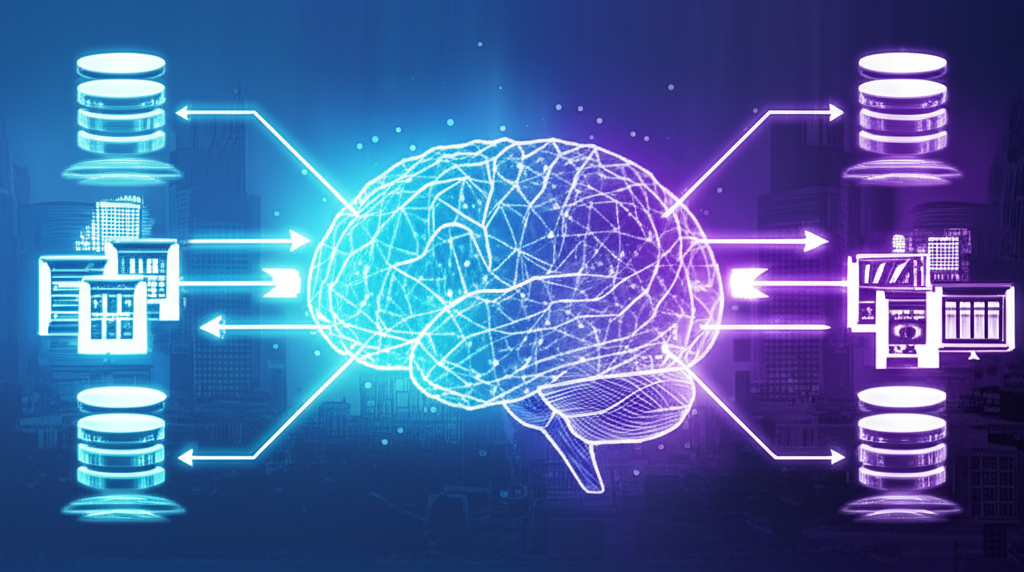
- Combining Retrieval and Generation: RAG combines the strengths of information retrieval systems with the generative capabilities of LLMs. Before an LLM generates a response, a retrieval component first fetches relevant information from an external, authoritative knowledge base.
- Addressing LLM Hallucination: By providing LLMs with specific, contextually relevant data, RAG significantly reduces the likelihood of the model fabricating information, ensuring responses are factual and verifiable.
- Leveraging External Knowledge Bases: Unlike traditional LLMs that rely solely on their pre-trained knowledge, RAG dynamically accesses external data sources such as company documents, databases, or up-to-the-minute web content.
- Improved Accuracy and Relevance: This two-step process ensures that the generated output is not only coherent but also highly accurate and directly relevant to the user's query and the latest available information.
Why RAG is a Game-Changer for Enterprises
For businesses, the ability to leverage AI without sacrificing accuracy or data integrity is paramount. RAG directly addresses the most critical pain points associated with deploying LLMs in enterprise settings. It allows companies to integrate their vast troves of proprietary data – internal reports, customer databases, policy documents, and more – securely and efficiently. This means an LLM can provide insights based on the company's specific, confidential information without that data being used for the model's general training, thus mitigating privacy concerns and intellectual property risks. Furthermore, RAG ensures that AI applications remain current, as they can pull information from constantly updated sources, eliminating the problem of outdated responses inherent in models trained on fixed datasets.
Key Benefits of Implementing RAG in Business
- Enhanced Factual Accuracy: Guarantees that AI-generated responses are grounded in verifiable facts from designated data sources.
- Reduced Model Retraining Costs: Eliminates the need for expensive and frequent retraining of large foundation models to keep them updated with new information; simply update the knowledge base.
- Access to Real-time and Proprietary Data: Enables LLMs to answer questions using the latest information available and access sensitive, internal company data safely.
- Improved Explainability and Trust: Because responses are tied to retrieved documents, users can often see the sources of information, fostering greater trust and transparency.
- Versatile Applications: Applicable across various business functions, from enhancing customer support chatbots with up-to-date product info to empowering internal knowledge management and accelerating research.
The Future of Enterprise AI with RAG
The adoption of Retrieval-Augmented Generation marks a significant milestone in the journey towards practical and trustworthy enterprise AI. As RAG technologies continue to evolve, we can expect even more sophisticated retrieval mechanisms, advanced re-ranking algorithms, and seamless integration into existing business workflows. This methodology is not just a temporary fix but a foundational shift, paving the way for AI systems that are not only intelligent but also reliable, auditable, and truly aligned with an organization's specific knowledge and needs. Enterprises that embrace RAG today will be well-positioned to unlock unprecedented value from their data and drive innovation across all departments, setting a new standard for AI application in the business world.