



OpenAI's GPT-4o: The New Multimodal Frontier Explained
OpenAI has once again pushed the boundaries of artificial intelligence with the recent announcement of GPT-4o, a new flagship model that represents a significant leap forward in multimodal capabilities. The 'o' in GPT-4o stands for 'omni,' signifying its ability to natively process and generate content across text, audio, and visual inputs and outputs. This release isn't just an incremental update; it’s a foundational shift towards more natural and intuitive human-computer interaction, bringing AI closer to understanding and responding to the world in a more human-like way. Unlike previous models where separate models were often chained together to handle different modalities (e.g., speech-to-text, text-to-GPT, GPT-to-text-to-speech), GPT-4o is trained end-to-end across text, vision, and audio. This unified architecture eliminates performance bottlenecks and latency issues, resulting in a more cohesive and natural interaction. This means GPT-4o doesn't just convert speech to text and then process it; it 'hears' the nuances, tone, and context directly, leading to more intelligent and contextually appropriate responses. It's a single neural network capable of reasoning across all inputs simultaneously. GPT-4o marks a significant step towards a future where AI interactions are indistinguishable from human ones in terms of naturalness and responsiveness. This omnimodal capability opens doors to entirely new paradigms of human-computer interaction, moving beyond simple commands to rich, contextual dialogues. As these models become more accessible and integrated into daily tools, they will fundamentally reshape how we work, learn, and communicate. However, this also brings increased scrutiny on ethical AI development, bias mitigation, and the potential societal impact of such powerful and pervasive technologies. OpenAI's GPT-4o is more than just an upgrade; it's a glimpse into the future of AI. By integrating text, audio, and vision into a single, cohesive model, it sets a new standard for intelligent agents. The implications are vast, promising a wave of innovation across industries and making AI an even more integral, and incredibly natural, part of our lives. The journey towards truly omni-intelligent AI continues, and GPT-4o is a powerful guidepost on that path.
Introduction to GPT-4o
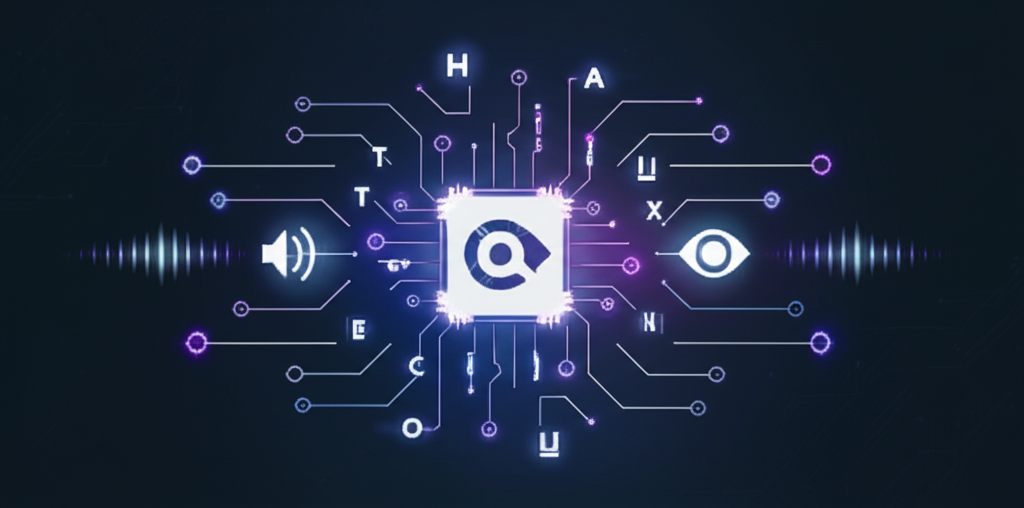
OpenAI has once again pushed the boundaries of artificial intelligence with the recent announcement of GPT-4o, a new flagship model that represents a significant leap forward in multimodal capabilities. The 'o' in GPT-4o stands for 'omni,' signifying its ability to natively process and generate content across text, audio, and visual inputs and outputs. This release isn't just an incremental update; it’s a foundational shift towards more natural and intuitive human-computer interaction, bringing AI closer to understanding and responding to the world in a more human-like way.
Key Capabilities and Features
- Native Multimodality: Processes text, audio, and vision inputs seamlessly and generates outputs across all three.
- Real-time Audio Interaction: Responds to audio inputs in as little as 232 milliseconds (avg. 320ms), akin to human conversation speed.
- Enhanced Visual Understanding: Can interpret complex visual cues, emotions, and objects in images/videos.
- Superior Text Performance: Matches GPT-4 Turbo performance on text in English and other languages, with improved speed and cost-efficiency.
- Emotional Nuance: Demonstrates improved ability to detect and respond to emotional tones in spoken language.
- Free Tier Access: Made available to all ChatGPT free users, with higher rate limits for Plus and Team users.
How GPT-4o Differs from Previous Models
Unlike previous models where separate models were often chained together to handle different modalities (e.g., speech-to-text, text-to-GPT, GPT-to-text-to-speech), GPT-4o is trained end-to-end across text, vision, and audio. This unified architecture eliminates performance bottlenecks and latency issues, resulting in a more cohesive and natural interaction. This means GPT-4o doesn't just convert speech to text and then process it; it 'hears' the nuances, tone, and context directly, leading to more intelligent and contextually appropriate responses. It's a single neural network capable of reasoning across all inputs simultaneously.
Real-World Applications and Impact
- Enhanced Virtual Assistants: More natural, emotionally intelligent, and context-aware conversational AI.
- Accessibility Tools: Revolutionary assistance for visually impaired users by describing surroundings and interpreting visuals in real-time.
- Education and Tutoring: Interactive learning experiences with visual aids, real-time feedback, and dynamic explanations.
- Customer Service: AI agents that can understand complex customer issues across voice, chat, and even video calls.
- Content Creation: Generating text, audio narration, and even visual concepts from a single prompt.
- Robotics: More intuitive human-robot interaction through better understanding of spoken commands and visual environments.
The Future of AI Interaction
GPT-4o marks a significant step towards a future where AI interactions are indistinguishable from human ones in terms of naturalness and responsiveness. This omnimodal capability opens doors to entirely new paradigms of human-computer interaction, moving beyond simple commands to rich, contextual dialogues. As these models become more accessible and integrated into daily tools, they will fundamentally reshape how we work, learn, and communicate. However, this also brings increased scrutiny on ethical AI development, bias mitigation, and the potential societal impact of such powerful and pervasive technologies.