



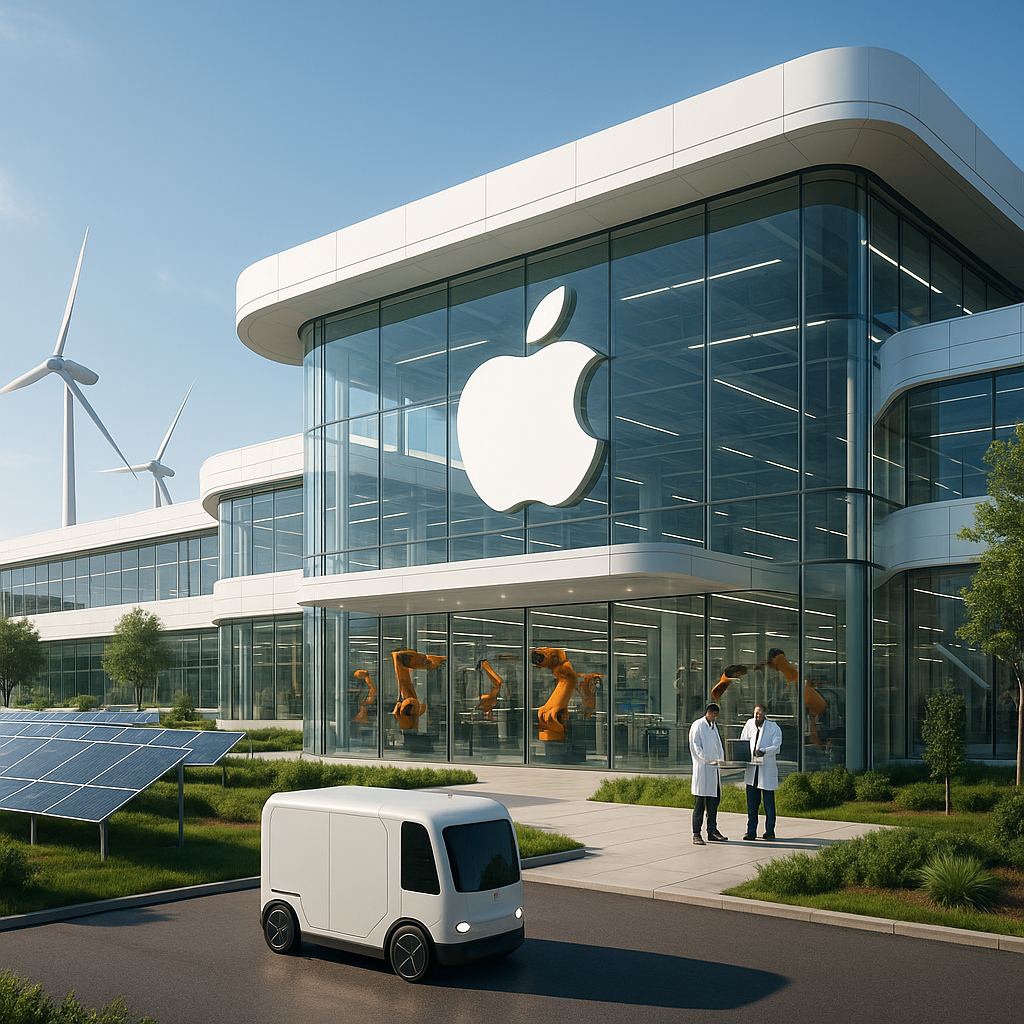
Apple Commits $600B to U.S. Manufacturing & AI Expansion
Apple announced a massive $600 billion U.S. investment across four years, launching the American Manufacturing Program (AMP) to bring more advanced manufacturing, R&D, and AI infrastructure stateside. The initiative represents the largest private sector commitment to U.S. manufacturing in the 21st century.
Investment Breakdown
- $240 billion allocated to manufacturing facilities across 12 states
- $180 billion dedicated to AI research and development centers
- $120 billion for supply chain infrastructure and logistics
- $60 billion for workforce training and education programs
Key Highlights
- Supports 450,000 U.S. supplier jobs and will directly hire 20,000 people in STEM and AI roles
- New partnerships with Corning for iPhone glass and rare-earth magnet sourcing from MP Materials
- Building an end-to-end Silicon supply chain and expanding AI/R&D campuses
- Establishing 8 new manufacturing plants in Texas, Arizona, and North Carolina
- Creating the largest private AI computing cluster in North America
- Partnering with 15 universities for advanced manufacturing research
Strategic Aims
This move secures Apple's supply chain, strengthens national infrastructure, and embeds AI capacity domestically—all aligning with broader tech sovereignty trends. The company aims to reduce international dependencies by 40% while maintaining cost competitiveness through automation and AI integration.
Economic Impact Projections
- Expected to contribute $85 billion annually to U.S. GDP by 2029
- Will create indirect employment for additional 200,000 workers
- Projected to save $12 billion annually in logistics and import costs
- Estimated 15% reduction in product delivery times to U.S. consumers
Technology Innovation Centers
Apple will establish five major AI research hubs focusing on machine learning, autonomous systems, and human-computer interface development. Each center will collaborate with local universities and house 2,000-3,000 researchers and engineers.
Environmental Commitments
- All facilities will operate on 100% renewable energy by 2027
- Carbon-negative manufacturing processes for 80% of products
- Water recycling systems achieving 95% efficiency rates
- Zero-waste-to-landfill certification for all new facilities